
Mother Teresa (1910–1997), born Anjezë Gonxhe Bojaxhiu, was an Albanian-Indian Catholic nun and missionary best known for her lifelong service to the poor, sick, and dying. She founded the Missionaries of Charity, a Roman Catholic religious congregation devoted to helping “the poorest of the poor.”
Recognized worldwide as a symbol of selfless compassion, Mother Teresa became a Nobel Peace Prize laureate and was later canonized as Saint Teresa of Calcutta by the Catholic Church.
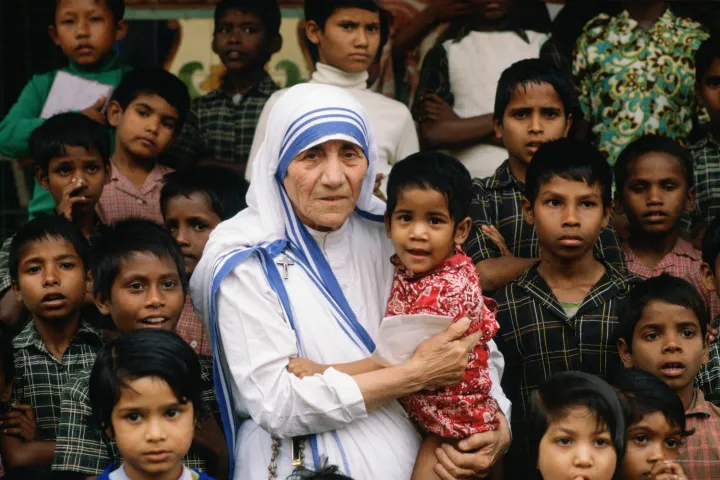
Early Life and Calling of Mother Teresa
Mother Teresa was born on August 26, 1910, in Skopje (now in North Macedonia), then part of the Ottoman Empire. She felt a strong calling to religious life at a young age and joined the Sisters of Loreto at age 18.
In 1929, she moved to India and began teaching at a girls’ school in Calcutta (Kolkata). However, it was during a train journey in 1946 that she experienced what she described as a “call within a call” — a divine message to leave the convent and serve the destitute on the streets.
The Missionaries of Charity: A Life of Service
In 1950, Mother Teresa founded the Missionaries of Charity, beginning with just a few members. Their mission was to care for:
- The homeless
- The dying
- Those with leprosy
- Orphans and the abandoned
The organization grew rapidly, spreading across the globe. Today, it operates in over 130 countries, running hospices, orphanages, and centers for the poor and sick.
Key Achievements and Awards
Mother Teresa received global recognition for her humanitarian work. Notable awards include:
- Nobel Peace Prize (1979)
Recognized “for work undertaken in the struggle to overcome poverty and distress.” - Bharat Ratna (1980)
India’s highest civilian award for her contribution to the nation. - Presidential Medal of Freedom (1985)
Awarded by the United States for her global humanitarian efforts.
These honors acknowledged not just her deeds but also the moral message she carried — that every life has value, no matter how poor or ill.
Criticism and Controversies
Despite her global admiration, Mother Teresa faced criticism from some scholars and journalists who questioned:
- The quality of medical care in her homes
- Her acceptance of donations from controversial sources
- Her stance on suffering and pain
However, many defenders argue that her primary mission was dignity, love, and care, not medical perfection, and that her intent was always grounded in service to humanity.
Canonization and Sainthood
After her death on September 5, 1997, the Vatican fast-tracked her canonization process due to her widespread reverence.
- Beatified in 2003 by Pope John Paul II
- Canonized as Saint Teresa of Calcutta on September 4, 2016, by Pope Francis
Two miracles attributed to her intercession — healing of serious illnesses — were verified by the Church, fulfilling the criteria for sainthood.
Mother Teresa’s Lasting Legacy
Mother Teresa’s legacy continues through:
- Missionaries of Charity, active in over 130 countries
- Her writings, especially Come Be My Light
- Annual celebrations of Mother Teresa Day
- Numerous hospitals, schools, and streets named in her honor
Her teachings emphasized love in action, humility, and serving with joy.
Mother Teresa Quotes That Inspire
“Not all of us can do great things. But we can do small things with great love.”
“If you judge people, you have no time to love them.”
“Peace begins with a smile.”
Her simple yet powerful words continue to inspire millions across cultures and religions.
Conclusion: Why Mother Teresa Still Matters
Mother Teresa stands as a universal symbol of kindness, compassion, and selfless service. Her life reminds us that the world doesn’t change only through grand gestures but through small acts of love done consistently. read more