
Allama Muhammad Iqbal (1877–1938) is one of the most celebrated poets, philosophers, and visionaries in the history of the Indian subcontinent. Known as “Shair-e-Mashriq” (Poet of the East), Iqbal’s poetic genius and philosophical thoughts not only enriched Urdu and Persian literature but also shaped the political and ideological foundation of Pakistan. His work continues to inspire millions around the world.
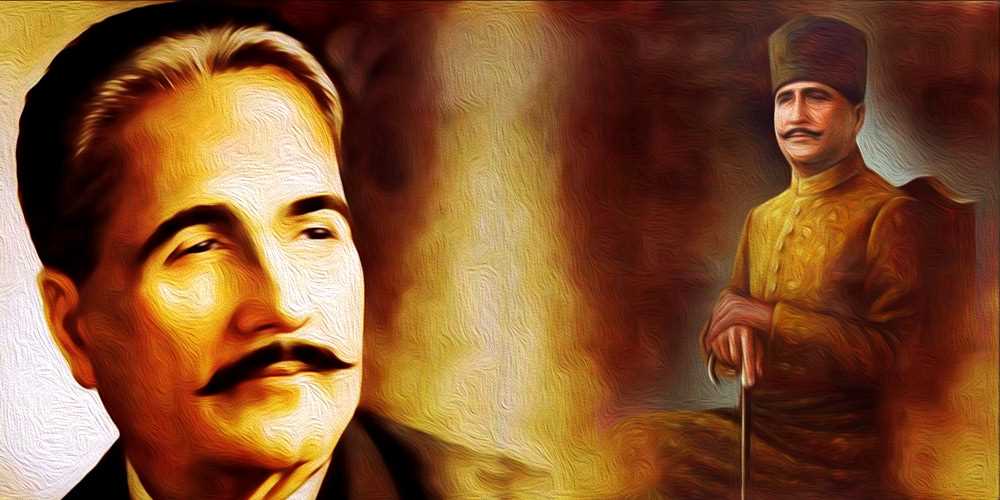
Early Life of Allama Iqbal
Allama Iqbal was born on November 9, 1877, in Sialkot, Punjab (then part of British India). He belonged to a Kashmiri family known for its devotion to education and spirituality. From a young age, Iqbal showed extraordinary talent in poetry and philosophy.
- Primary Education: Mission School, Sialkot
- Higher Studies in India: Government College, Lahore – BA and MA in Philosophy
- Education Abroad:
- Cambridge University (England) – Philosophy
- University of Munich (Germany) – PhD in Philosophy
- Lincoln’s Inn (London) – Law
Philosophical Thoughts of Allama Iqbal
Iqbal’s philosophy was deeply rooted in Islamic teachings, selfhood (Khudi), and the revival of the Muslim world. He believed that Muslims must rediscover their identity, dignity, and unity through self-awareness and action.
Key concepts in his philosophy include:
- Khudi (Selfhood): Building inner strength and self-respect.
- Ijtehad: Adapting Islamic principles to modern challenges.
- Unity of the Muslim Ummah: Promoting solidarity among Muslims worldwide.
Poetic Contributions
Iqbal’s poetry, written in Urdu and Persian, blends beauty, wisdom, and revolutionary ideas. His works are celebrated for their lyrical excellence and profound message.
Famous collections include:
- Bang-e-Dra (Call of the Marching Bell)
- Asrar-e-Khudi (Secrets of the Self)
- Rumuz-i-Bekhudi (Hints of Selflessness)
- Payam-e-Mashriq (Message of the East)
- Bal-e-Jibril (Gabriel’s Wing)
Role in the Creation of Pakistan
Allama Iqbal’s political vision played a crucial role in the idea of a separate homeland for Muslims in South Asia. In his famous Allahabad Address in 1930, he clearly expressed the need for an independent Muslim state, which later became Pakistan in 1947.
Legacy and Influence
Allama Iqbal passed away on April 21, 1938, but his vision and poetry continue to inspire generations. His works are studied in schools and universities, and his philosophy influences modern political and cultural thought.
Quotes by Allama Iqbal
- “Khudi ko kar buland itna ke har taqdeer se pehle, Khuda bande se khud pooche, bata teri raza kya hai.”
- “Nations are born in the hearts of poets, they prosper and die in the hands of politicians.”
Conclusion
Allama Iqbal was not only a poet but also a philosopher, thinker, and visionary leader. His teachings emphasize self-respect, knowledge, and unity—values that remain relevant for the modern world. His dream of a free Muslim nation became a reality in the form of Pakistan, making him one of the most respected figures in South Asian history. read more
2 responses to “Allama Iqbal”
Been messing around on gamev3 and it’s pretty neat! They’ve got a good selection of games and the site loads quickly. No complaints here – good for a quick gaming fix. gamev3
[…] He was not just a humanitarian; he was a symbol of hope for the poor and helpless. His life teaches us that true success lies in serving others selflessly. He will always be remembered as Pakistan’s greatest social worker and a hero of humanity. read more […]