
The name Quaid-e-Azam is synonymous with the creation of Pakistan. The title, meaning “The Great Leader,” is a testament to the unparalleled role Muhammad Ali Jinnah played in the formation of the nation. Jinnah’s vision, leadership, and unwavering determination were pivotal in the establishment of Pakistan, a country that was born out of the desire for a separate homeland for Muslims of the Indian subcontinent.Indeed, his life is a saga of perseverance, statesmanship, and integrity, which earned him not only the title of Quaid-e-Azam but also the respect and admiration of millions.”
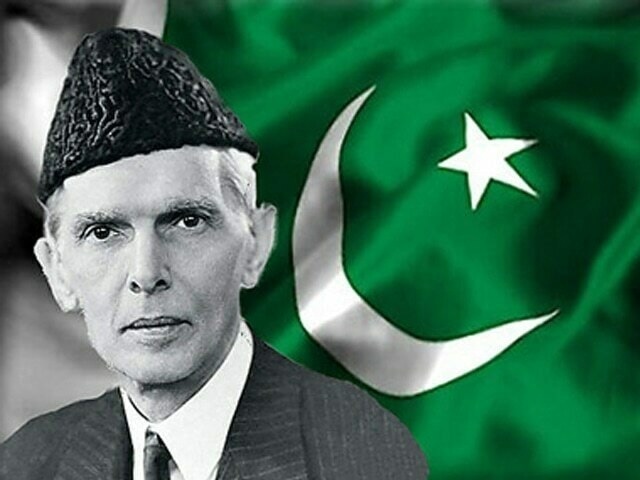
Early Life and Education Quaid-e-Azam
Muhammad Ali Jinnah was born on December 25, 1876, in Karachi, then part of British India. He hailed from a prosperous merchant family, and his early education took place in Karachi. Jinnah’s intellectual capacity was evident from an early age, and he was sent to England in 1892 to study law at Lincoln’s Inn.
This decision became a turning point, leading Jinnah to excel in law and become one of the youngest called to the bar.
Entry into Politics Quaid-e-Azam
Initially, he was a staunch advocate of Hindu-Muslim unity and worked towards promoting cooperation between the two communities. His moderate approach to politics, coupled with his legal background, made him an influential figure in the INC.
“However, over time, Jinnah saw that Congress, led by Gandhi and Nehru, increasingly favored Hindu interests, prompting him to reconsider his stance.” By 1913, Jinnah joined the All India Muslim League, a political party that represented the interests of Muslims in India.
The Demand for a Separate Nation
Jinnah’s transformation from a champion of Hindu-Muslim unity to the proponent of a separate Muslim state is one of the most significant aspects of his political career. Initially, Jinnah had hoped for a united India, where both Hindus and Muslims could live together peacefully under one flag. However, as he became more disillusioned with the Congress leadership, he began to see that the Muslim community’s concerns and aspirations were being sidelined.
It was at this juncture that Jinnah began to champion the cause of a separate nation for Muslims.
The Lahore Resolution, passed in 1940 by the All India Muslim League, formally called for the creation of Pakistan as a separate nation for Muslims. This marked the beginning of the struggle for Pakistan’s independence, with Jinnah at the helm. “Moreover, during this period, he spoke and wrote with clarity and determination, presenting a compelling case for the necessity of Pakistan.”
The Pakistan Movement
Jinnah’s leadership during the Pakistan Movement was nothing short of extraordinary. As leader of the Muslim League, Jinnah worked tirelessly to unite Muslims behind the idea of Pakistan .His leadership was defined by a pragmatic approach to politics, combining both diplomacy and direct action when needed.
One of the defining moments in Jinnah’s political career came during the 1945-46 elections, in which the Muslim League won a landslide victory in the Muslim-majority areas of India. This victory demonstrated the overwhelming support for the idea of Pakistan among Muslims. Jinnah’s unwavering commitment to the cause of Pakistan further solidified his status as the undisputed leader of the Muslim community.
In addition to his political acumen, Jinnah’s oratory skills played a crucial role in his success. His speeches, delivered with great passion and conviction, inspired millions of Muslims to join the struggle for independence. Jinnah’s message of unity, discipline, and perseverance became the rallying cry for Muslims across India.
Quaid-e-Azam’s Vision for Pakistan
Jinnah’s vision for Pakistan was clear and forward-thinking. He envisioned a country where Muslims could live freely, practice their religion, and enjoy political and economic equality. His vision was not only focused on the creation of a separate state but also on the establishment of a just society where the rule of law prevailed, and the rights of minorities were protected.
Jinnah’s famous speech on August 11, 1947, at the Constituent Assembly of Pakistan remains one of the most profound expressions of his vision for the new nation. In this speech, he emphasized the importance of democracy, equality, and religious tolerance, stating:
“You are free; you are free to go to your temples, you are free to go to your mosques or to any other place of worship in this State of Pakistan. You may belong to any religion, caste, or creed—that has nothing to do with the business of the State.”
This statement encapsulated Jinnah’s belief in a Pakistan where religious freedom and tolerance would be central values. It is a testament to his secular approach to governance, which sought to ensure that the state would not discriminate on the basis of religion, race, or ethnicity.
Challenges and Struggles
The creation of Pakistan did not come without challenges. The partition of India in 1947, which led to the creation of Pakistan, was marred by violence, mass migrations, and communal riots. Millions of Muslims, Hindus, and Sikhs were displaced, and countless lives were lost in the aftermath of the partition. Jinnah, who had envisioned a peaceful and prosperous Pakistan, found himself at the helm of a nation grappling with severe economic, political, and social challenges.
Jinnah’s health also began to deteriorate in the aftermath of Pakistan’s creation. The stress of leading the nation through its formative years, coupled with his long-standing battle with tuberculosis, took a toll on his health. Despite his declining health, Jinnah continued to lead Pakistan with unwavering determination, navigating the difficult political landscape and working to establish the new nation on firm footing.
Legacy and Contribution
Jinnah’s legacy is one of immense significance. As the founding father of Pakistan, he left an indelible mark on the nation’s history. His leadership, vision, and dedication to the cause of Pakistan laid the foundation for the country’s growth and development. Jinnah’s contribution to Pakistan was not limited to its creation; his principles and values continue to guide the nation to this day.
“Nevertheless, despite the challenges that Pakistan has faced over the years, Jinnah’s vision for a just, democratic, and inclusive society remains an aspirational goal for the country.”His commitment to religious tolerance, democracy, and the rule of law continues to inspire generations of Pakistanis, who look to his leadership as a model for the future.
Conclusion
Quaid-e-Azam Muhammad Ali Jinnah’s life and leadership are a testament to the power of vision, determination, and integrity. His unwavering commitment to the cause of Pakistan, his strategic political insight, and his steadfastness in the face of adversity were instrumental in the creation of the nation. Jinnah’s legacy continues to shape Pakistan’s political landscape, and his vision for a democratic and inclusive society remains an ideal that Pakistan continues to strive toward.
Jinnah’s life story is not just the history of a nation’s birth; it is a story of a leader who remained steadfast in his beliefs and was willing to sacrifice everything for the greater good. His contributions to the Muslim community, to the creation of Pakistan, and to the ideals of justice, democracy, and religious tolerance make him one of the most revered figures in history. read more
One response to “Quaid-e-Azam”
[…] The Pakistan Cricket Team stands as a symbol of national pride, passion, and resilience. From World Cup glories to unforgettable rivalries, especially against India, Pakistan continues to leave a mark on international cricket. With a promising mix of youth and experience, fans worldwide look forward to what the Men in Green will achieve next.read more […]